Web Design · · 8 min read
Why even a great website is falling behind
The way people find companies changed in about two years. AI assistants and Google's AI summaries now answer many questions before anyone clicks, so a company website built before 2024 can lose visitors without doing anything wrong.
 Alexander van den BergFounder and CEO

In short
Even a great company website can fall behind, through no fault of its own, whether you sell industrial parts, legal advice, homes or hotel rooms. In about two years, AI assistants and Google's AI summaries started answering questions before anyone clicks, and many company websites were built before that. Keeping up means adding what these new readers need: clear facts, real answers, regular updates and fast pages.
Your website might be beautiful. It might have won you customers for years. The reason it can still slip is simple: the world it was built for has changed. Until recently a website had two readers, people and Google. Now AI assistants read it too, and they decide more and more often which companies get recommended.
How fast did search change?
- November 2022. ChatGPT launches. For most people it is a curiosity.
- May 2024. Google starts answering questions itself, with AI summaries above the search results.
- 2024. Nearly 60% of Google searches in the US end without a click (SparkToro, 2024).
- July 2025. When Google shows an AI summary, people click a regular search result in 8% of visits, against 15% when there is none (Pew Research Center, 2025).
- Early 2026. 68% of US Google searches end without a click (SparkToro, 2026). AI summaries appear on about one in five searches (Ahrefs), and when they do, the top result gets close to 60% fewer clicks (Ahrefs, 2026).
- June 2026. Bots request more web pages than people do: about 57% against 43% (Cloudflare data, reported by Semrush).
- ~60%
of US Google searches ended without a click in 2024 (SparkToro).
- 8% vs 15%
of visits end with a click on a regular result, with and without an AI summary (Pew Research Center).
- 68%
ended without a click in early 2026 (SparkToro).
If your website was built before 2024, it was built before most of this existed. You may already see the effect in your statistics: the same rankings, with fewer visitors.

Why is a good website no longer enough?
Your website still works exactly as it was designed. The rules around it changed, in four ways.
It was built to win a click that happens less often
The old goal was clear: rank high, earn the click, convince the visitor on the page. Today the answer is often given before anyone clicks, by an AI summary in Google or by an assistant such as ChatGPT, Claude, Gemini or Grok. So your website has a second job. It still has to convince visitors, and it also has to supply the answer that is given when nobody visits.
It was designed for eyes
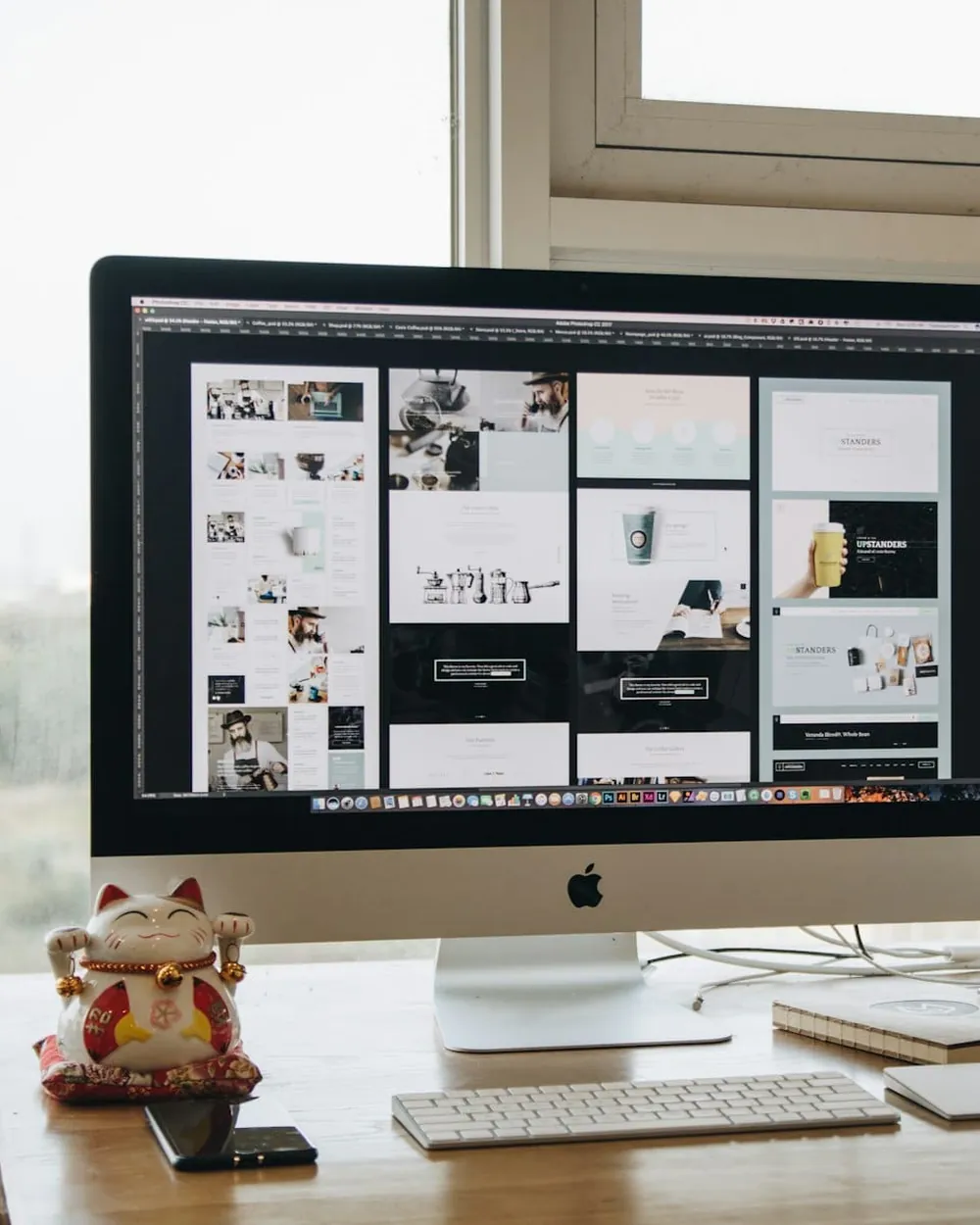
The best websites of recent years are visual: large photos, short slogans, animation, text placed inside images. People enjoy that. An AI assistant reads text. It looks for plain facts it can repeat: what you do, for whom, where, at what price and on what terms. A stunning homepage with very few words gives a machine very little to say about you.
It answers the questions of a few years ago
We used to write for short keywords such as "valve supplier" or "accountant Miami". People now ask AI assistants full questions, in every industry:
- "Which supplier of stainless steel valves delivers to Germany within a week and is ISO 9001 certified?"
- "Which accounting firm works with small online shops and replies the same day?"
- "Which webshop sells refurbished laptops with a two-year warranty?"
- "Which real estate agent in Miami knows the condo market in Brickell?"
- "Which hotel in Hanoi's Old Quarter is quiet, good for a family with two children and close to the lake?"
The assistant recommends the company whose website answers that question.




This is where data earns its reputation as gold. With AI we can research which questions people really ask, how competitors answer them and what AI says about your company today, and turn that into pages that fit. AI does the volume and our team checks every fact, as described in our 6 rules for AI in marketing.
It stands still while others move
Updating a website used to be slow and costly, so many websites barely changed between redesigns. AI assistants prefer current information. Ahrefs analyzed 17 million AI citations and found that the pages AI assistants cite are on average about 26% newer than the pages in classic Google results (Ahrefs). Meanwhile, new websites that are built to be updated every week go live every day. They compete for the same traffic and the same attention as yours.
What do zero-click search, AI Overviews and GEO mean?
- Zero-click search: a search that ends without a click to any website, because the answer is already on the results page.
- AI Overviews: the AI summaries Google shows above its search results, in the US since May 2024.
- GEO (generative engine optimization): making your website easy for AI assistants to find, understand and recommend. It builds on SEO; it does not replace it.
Has web technology moved as well?
WordPress was the standard for years. We now build websites in Astro, with Claude as our development partner. Pages arrive as finished, lightweight HTML, which is fast for people and easy for AI crawlers to read. In HTTP Archive data from April 2026, 67% of Astro websites passed Google's Core Web Vitals test for speed and quality, compared with 49% of WordPress websites (Search Engine Journal).
The bigger change is agility. There are no plugins to update and no database to patch, so far less can break on a Friday afternoon. Adding a page, a language or a new offer used to be a project. Now it is a small task at a fraction of the earlier cost. That is what makes keeping up affordable. A WordPress website that performs well can stay; we explain when a move makes sense in WordPress to Astro.
What does keeping up look like?

A great website is a great starting point. Your brand, your photos and your story stay. Keeping up means adding what the new readers need:
- Clear facts in plain text on every important page.
- Answers to the questions your customers really ask.
- Regular updates, so people and machines can see that you are current.
- Pages that load fast on a phone.
- A regular check of what AI assistants say about you.
For some websites that is a few weeks of focused improvements. For others a rebuild is the faster and cheaper route. It depends on how the website was built.
How can you check where your website stands today?
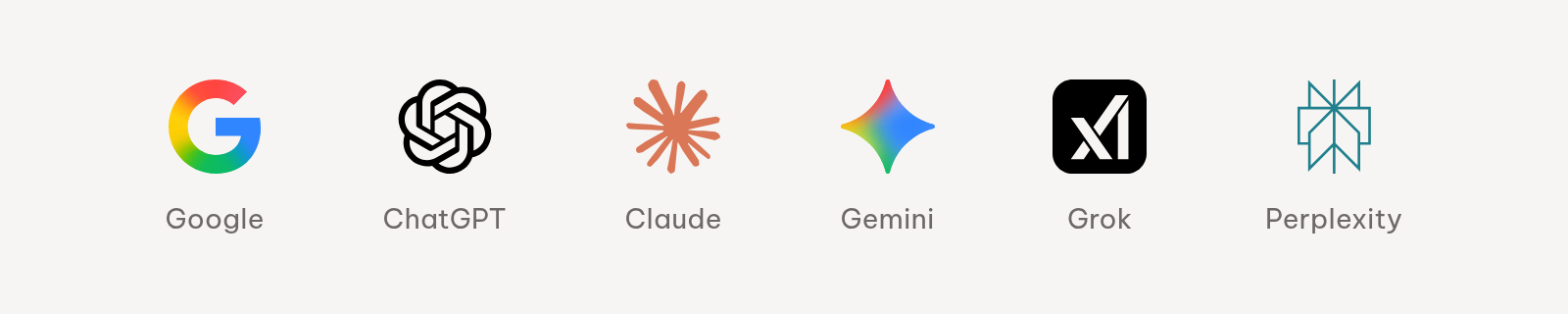
- Ask ChatGPT, Claude, Gemini, Grok and Perplexity to recommend a company like yours. Are you mentioned? Try more than one, because their answers differ.
- Is what they say about you correct and up to date?
- Compare your search traffic this year with last year. What changed?
- When were your most important pages last updated?
If your website plays a role in how you win customers, these answers are worth knowing.
Frequently asked questions
Why does my website get fewer visitors with the same rankings?
More searches end without a click. AI summaries in Google and assistants such as ChatGPT answer the question on the results page or in the chat. In early 2026, 68% of US Google searches ended without a click, so a ranking can stay the same while fewer people visit.
What is GEO?
GEO (generative engine optimization) means making your website easy for AI assistants such as ChatGPT, Claude, Gemini, Grok and Perplexity to find, understand and recommend. It builds on SEO: clear facts in plain text, answers to real questions and pages that stay up to date.
Does this apply to my type of business?
Yes. Any company whose customers search before they buy is affected: industrial suppliers, professional services, shops and webshops, real estate agents, restaurants, hotels and local service businesses. The questions differ per industry, but AI assistants look for the same thing: clear, current facts that answer them.
Do I need a new website to keep up?
Not always. For some websites a few weeks of focused improvements are enough: clear facts, answers to customer questions, regular updates and fast pages. For others a rebuild is the faster and cheaper route. It depends on how the website was built.
How do I check what AI assistants say about my company?
Ask ChatGPT, Claude, Gemini, Grok and Perplexity to recommend a company like yours. Check whether you are mentioned and whether the facts are correct and current. Try more than one, because their answers differ.
Want the full picture?
Our website and AI visibility analysis shows how your current website performs and, more importantly, how your company is found and cited by AI assistants. You receive a score, the five most valuable fixes and a short walkthrough of the results.
Read more about AI visibility and how we build websites, or contact us to have the report run for your organization.