Hospitality · · 4 min read
We asked AI where to stay 228 times. A much-loved 4-star hotel was recommended in 3% of the answers
Here is a hotel most owners would envy. An upscale 4-star city hotel in a historic city center in northern Vietnam. A TripAdvisor score of 4.8 from more than 5,000 reviews.
 Alexander van den BergFounder and CEO
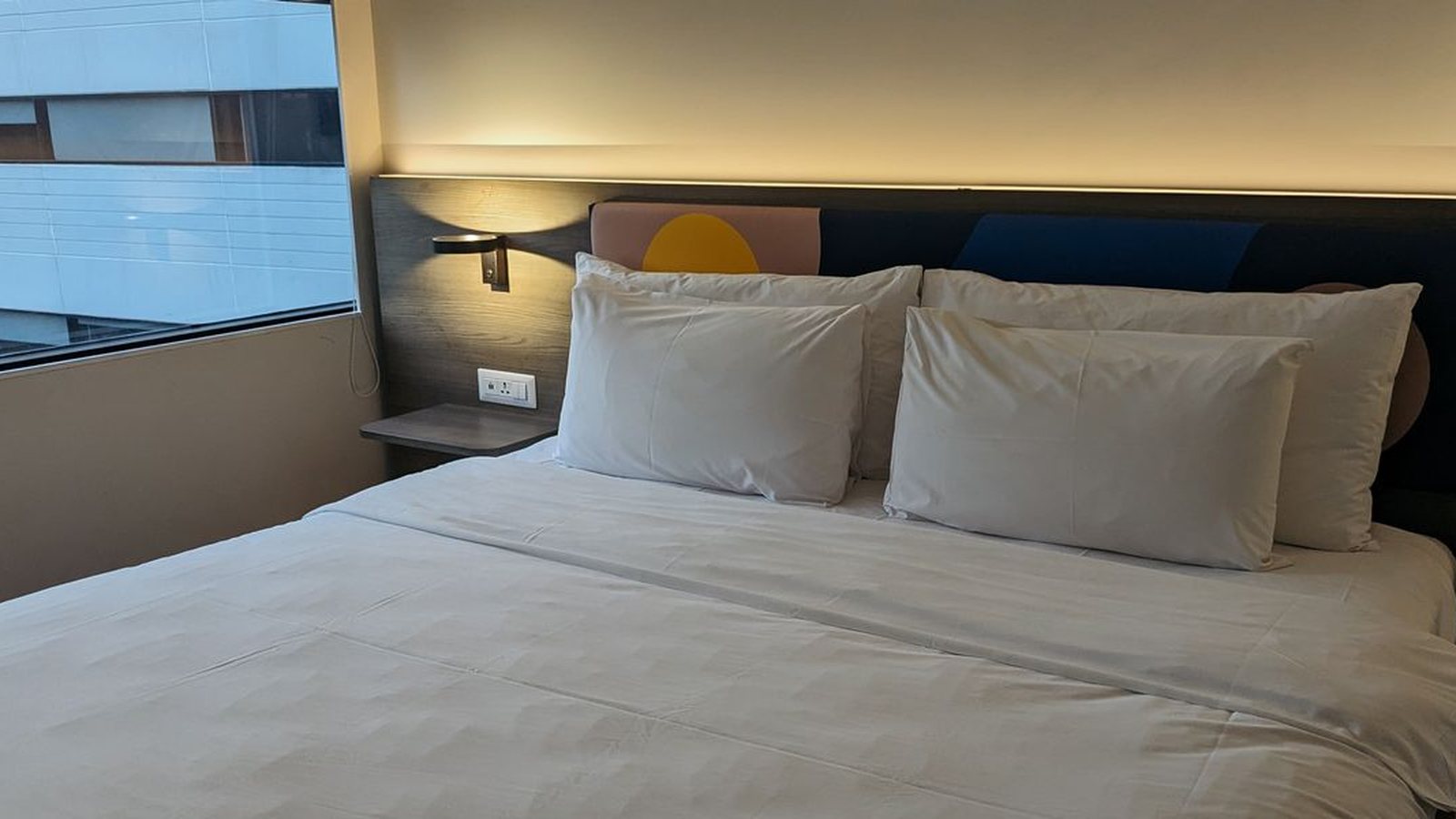
Here is a hotel most owners would envy. An upscale 4-star city hotel in a historic city center in northern Vietnam. A TripAdvisor score of 4.8 from more than 5,000 reviews. 4.5 on Google. A website in four languages.
Guests love it. So we asked a simple question: when travelers ask AI where to stay, does AI recommend it?
The short answer: rarely. Here is what we found, and what it means for your hotel.
What is AI visibility?
AI visibility is how often, and how accurately, AI assistants mention your business when people ask them for advice. For a hotel, it is the answer to one question: when a traveler asks ChatGPT, Gemini or Google's AI where to stay, is your hotel in the answer? An AI visibility audit measures it the way we did here: real questions, many answers, counted.
How we tested
On 27 October 2026, we asked the questions real travelers ask:
- 36 questions in 4 languages: 18 in English, 7 in Vietnamese, 6 in Korean and 5 in Japanese.
- 26 open questions ("best 4-star hotel in the city center for a family") and 10 questions naming the hotel.
- 7 AI platforms: ChatGPT, Gemini, Perplexity, Copilot, Google AI Mode, Google AI Overviews and Claude.
- 228 answers in total, covering discovery, comparison, amenities, location and booking intent.
One caveat before the numbers: AI answers vary by session and location. This is a snapshot of one day, not a permanent ranking.
Finding 1: great reviews do not mean AI recommends you
On the open questions, where the traveler did not name the hotel, it was recommended in 3.0% of answers: 5 out of 165.
Its share of voice (its share of all hotel mentions across the answers) was 1.8%. The leading competitor had 28.9% and appeared in 47.9% of answers. The next three competitors had 27.5%, 19.0% and 16.8%.
Five upscale 4 and 5-star hotels within about a kilometre compete for the same guests. In AI answers, four of them were far more visible.
Finding 2: every AI platform tells a different story
The hotel's visibility depended heavily on where the traveler asked:
- Google AI Overviews: 10%
- Copilot: 7.7%
- ChatGPT: 3.8%
- Gemini, Perplexity, Google AI Mode and Claude: 0%
Being visible in one AI tool tells you nothing about the others. Even two Google products, AI Overviews and AI Mode, gave very different results.
By language, it was mentioned in 3.3% of English answers, 3.2% of Vietnamese, 4.2% of Korean and 0% of Japanese answers, even though the website exists in four languages.
Finding 3: AI knows the hotel, but only for niche questions
Traveler planning with a map and smartphone
The hotel did win on specific questions: about a nearby landmark, pool and spa, staycations and family stays. It was absent from the big, general questions such as "best luxury hotel".
When AI did describe it, the sentiment was accurate and mostly positive: location, staff, breakfast, cleanliness and wellness. What AI held against it: no pool, 4 stars against 5-star rivals, and an older property.
Finding 4: AI mixed it up with its sister hotel
Two AI platforms merged the hotel with a similarly named sister property. Facts from one hotel appeared under the other's name. Guests reading those answers got a confused picture of both.
Finding 5: AI trusts the booking sites more than the hotel
The most cited sources in the answers:
- Booking.com: 65 citations
- TripAdvisor: 56
- Google: 42
- Agoda: 35
- the hotel's own website: 14
- an unofficial third-party site: 13
The hotel's own website was cited barely more often than an unofficial site it does not control. And on Agoda, its score of 8.7 was the second lowest in the set, with competitors up to 9.5. Only 2 of its last 20 Google reviews had a reply from the owner.
Finding 6: AI agents cannot book it
AI agents increasingly try to check policies and availability for travelers. We scored how ready the hotel is for them: 3.0 out of 10. That was the joint highest in its set, where scores ranged from 1.0 to 3.0. In other words, every hotel in this area has the same gap.
The reasons:
- Policies only appear inside offer packages, not on a plain page.
- The booking engine cannot be read by AI agents.
- No llms.txt file, a short summary some AI tools read.
- As a result, AI presented a package's cancellation rule as the hotel's general policy. A wrong fact, repeated with confidence.
What this means for your hotel
Three lessons we take from this audit:
- Your reviews are not enough. AI recommends the hotels it can describe with confidence, from facts it can check.
- Your own website should be the main source. Right now, AI leans on OTAs and review sites.
- The gap is fixable, and it is the same for your competitors. The first hotel in an area to fix it has a head start.
Next Tuesday we publish the nine fixes we recommended to this hotel.
Check your own hotel, free
Think of it as a free AI visibility checker, run by people rather than a tool. Our free AI visibility check asks 30 to 50 traveler questions in English, Vietnamese and your guests' languages, across multiple AI platforms. You see your mention rate, your share of voice against 3 to 5 nearby competitors, how AI describes you, the gaps in your schema, FAQ, Google Business Profile, OTA listings and reviews, and your priority fixes.
When I sit down with a client on this, we start with the checks above.
Request your free AI visibility check. The same questions sit inside our hotel marketing and local SEO for hotels.