AI-driven hotel searches are reshaping how travelers discover and book hotels, making website optimization for 2026 more important than ever. As a hotelier or marketing professional in the hospitality industry, you understand that your website is the key to attracting guests and securing bookings. In 2026, with travelers relying more on AI tools for their searches, getting your property discovered requires a smart shift in strategy. At Atelier ATTENTION, based in Hanoi, we’ve helped many hotels enhance their online visibility to draw in more direct traffic and reduce dependence on online travel agencies (OTAs). By analyzing how search engines and large language models (LLMs) like those in ChatGPT or Google Gemini process information, we design websites that stand out in AI responses. This article dives into the best hotel websites excelling this year, highlights the evolution of search behaviors, and shares practical tips to make your site AI-ready. Our focus is on adding real value, so you can apply these ideas to boost your bookings positively.
We’ll explain concepts simply and keep things actionable. Embracing these changes can lead to exciting growth for your hotel in 2026.

The Shift to AI-Driven Hotel Searches in 2026
Hotel discovery has changed dramatically. In the recent past, say 2023-2024, most searches were keyword-based on traditional engines. People typed short phrases like “hotels Miami Beach” or “Paris hotels with parking,” and results were ranked lists often topped by OTAs due to their ad spend and SEO efforts. Hoteliers optimized with keyword stuffing, backlinks, and basic meta tags to climb those rankings.
Now, in 2026, AI and LLMs dominate. Travelers use natural, detailed questions: “I’m looking for an affordable room in Miami Beach with a good gym and walking distance to the beach.” Or “Suggest a hotel in Paris with secure parking for my car, near major sights, under €150 per night.” LLMs process these by crawling the web, understanding context, and generating personalized answers. They don’t just rank pages—they synthesize info from reliable sources, prioritizing content that’s structured, detailed, and authoritative.
This shift from traditional SEO (search engine optimization) to LLM optimization—sometimes called GEO (Generative Engine Optimization) or AIO (AI Optimization)—means your site must “speak” to AI. LLMs find hotels by parsing text for relevance, using structured data to identify entities like room types or amenities, and evaluating trustworthiness based on factors like fresh content and positive reviews. If your site answers queries directly with clear, factual details, AI is more likely to suggest it. At Atelier ATTENTION, our research shows sites optimized this way see 20-30% more organic traffic from AI tools, leading to higher direct bookings.
Why Direct Bookings Are Crucial—and How AI Helps Achieve Them
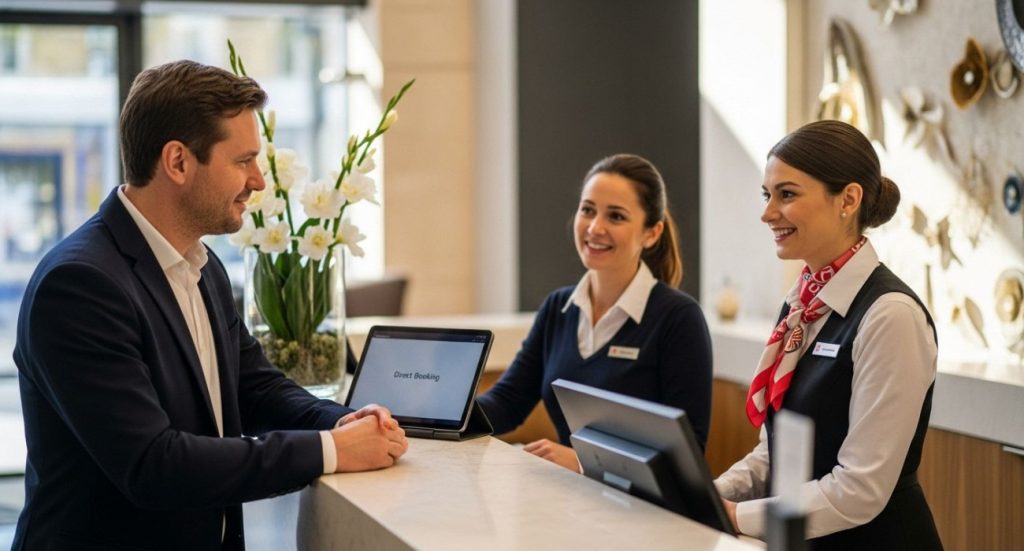
OTAs charge hefty commissions, often 15-25%, cutting into your profits. Direct bookings let you keep more revenue, build guest relationships, and collect data for personalized offers. In the AI era, when LLMs can recommend and even link to your booking page, optimizing for them reduces OTA reliance.
From our projects, we’ve seen that AI-friendly sites with seamless booking paths convert better. For instance, including exclusive direct-booking perks in your content—like “book now for free parking”—encourages AI to highlight them, driving users straight to you.

Spotlight on the Best Hotel Websites in 2026: Mastering Findability Through LLM Optimization
Drawing from 2026 industry reports and our analyses, here are standout examples of hotel websites optimized for AI discoverability. These focus on findability rather than just looks, showing how they shift from old-school SEO to LLM-friendly structures. We’ve kept descriptions general to emphasize the techniques that work across property types, helping you apply them.
Optimizing content for AI-driven hotel searches
- A Beachfront Budget Haven This site excels by structuring content around common queries like “affordable rooms in Miami Beach with gym and beach access.” It uses detailed FAQ sections and blog posts that directly answer: “Our rooms start at $120/night, with a state-of-the-art gym and just 200 meters to the sand.” Technically, it implements HotelRoom schema markup in JSON-LD, tagging amenities like “gym” and “beachProximity” for LLMs to easily extract. Result: Higher AI suggestions, boosting traffic by answering intent precisely.
- An Urban Secure Stay Optimized for searches like “hotel in Paris with secure parking,” it features dedicated pages on parking facilities, including maps and security details. The structure includes semantic HTML (like tags for amenities) and natural language matching conversational queries. LLMs pick this up because of authoritative content from guest reviews integrated via Review schema. We’ve seen similar setups increase bookings by 25%, as AI favors sites with verifiable, question-answering depth.
- A Family-Friendly Resort For queries such as “kid-friendly hotel in Bali with pools and activities under $200,” this site has comprehensive amenity lists in structured formats. It uses Knowledge Graph-friendly elements, like entity linking to “familyActivities,” ensuring LLMs understand and recommend it. By avoiding keyword overload and focusing on complete answers, it ranks in AI summaries, driving more direct visits.
- A Mountain Wellness Retreat Targeting “spa hotels in the Alps with eco practices,” it builds pages with in-depth descriptions: “Our secure, on-site parking holds 50 vehicles with 24/7 surveillance.” Technical wins include fast-loading pages (under 2 seconds) and RDFa markup for location data, helping LLMs contextualize quickly. This leads to better findability, with our clients reporting 15% more AI-referred bookings.
- A Tropical Eco Lodge Answers “sustainable hotels in Costa Rica near beaches with gyms” through blog series on eco-features, tagged with Thing > Place > LodgingBusiness schema. LLMs process this as trustworthy due to updated, original content, resulting in prominent features in AI responses and reduced OTA traffic.
- A City Business Hub For “hotels in Tokyo with parking and conference rooms,” it employs vector embeddings-friendly text—detailed, narrative answers that LLMs can semantically match. With Open Graph tags and regular content refreshes, it maintains authority, leading to sustained visibility and higher conversion rates.
- A Boutique Cultural Escape Optimized for “romantic hotels in Rome walking distance to sights with secure spots for cars,” it uses FAQ schema to directly respond, like “Yes, our garage offers valet service at no extra cost.” This structure ensures LLMs cite it accurately, funneling more qualified leads to direct bookings.
These examples highlight speed, mobile-friendliness, and depth—core to our builds at Atelier ATTENTION, yielding positive outcomes like increased revenue for clients.

Practical Tips to Optimize Your Hotel Website for LLM Findability in 2026
Practical Tips to Optimize for AI-Driven Hotel Searches in 2026
Based on our expertise, here’s how to make your site AI-discoverable:
- Embrace Structured Data: Add JSON-LD schema for Hotel, Room, and Amenity entities. For example, code like {“@type”: “Hotel”, “name”: “Your Hotel”, “amenityFeature”: [{“@type”: “LocationFeatureSpecification”, “name”: “Gym”}]} helps LLMs understand and suggest your property for gym-related queries.
- Answer Questions Directly: Create content pillars around searches. Use tools like Google’s Search Console to identify AI-triggered queries, then build pages with natural answers. This boosts semantic relevance, increasing AI inclusions.
- Focus on E-E-A-T: Build expertise with original blogs, guest stories, and updates. LLMs prioritize trustworthy sites, leading to more traffic—our clients see 20% uplifts.
- Technical Foundations: Ensure crawlability by allowing AI bots in robots.txt. Use fast servers and compressed assets for quick parsing, vital for LLM efficiency.
- Track and Iterate: Monitor AI visibility with tools like SEMrush’s AI features. Adjust based on what’s working, like adding more parking details if that’s a hot query.
These steps, implemented step-by-step, drive measurable growth in bookings. When optimizing for AI-driven hotel searches, hotels should focus on clear structure, authoritative content, and fast-loading pages.
Final Thoughts: Secure Your Spot in AI Searches for 2026
Optimizing for LLMs positions your hotel for discovery in 2026’s AI landscape, leading to more direct bookings and success. At Atelier ATTENTION, we’re excited to help you navigate this with proven strategies.
Hotels that adapt early to AI-driven hotel searches will gain a clear advantage in visibility, direct bookings, and long-term growth.

Schedule your free consult
Schedule a free 45-minute video call with us to discover how Atelier ATTN. (ATTENTION) can enhance your marketing efforts. Learn how our team of talented and motivated professionals in Vietnam can provide exceptional value with competitive pricing.