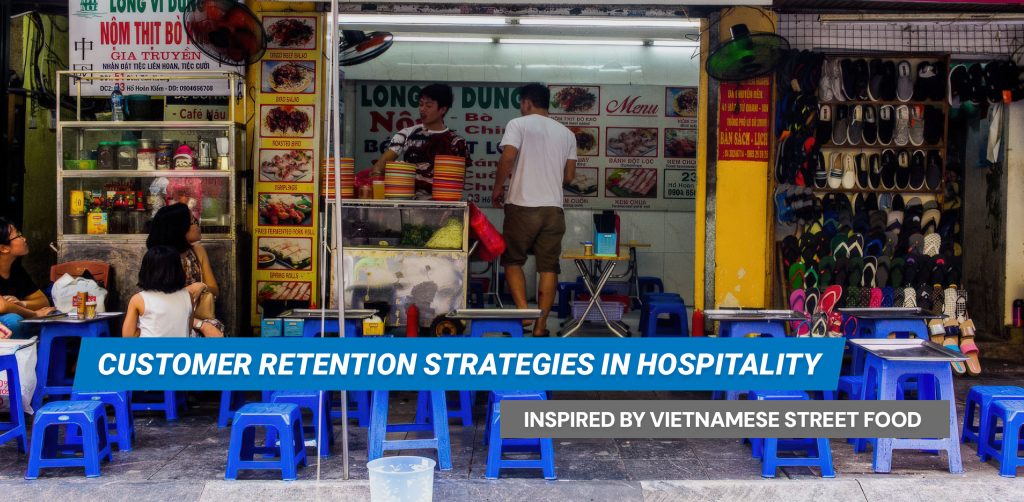
I was late to a client meeting because of a grandmother and her grill.
Not because she was slow—Vietnamese street food vendors are many things, but slow isn’t one of them. I was late because I couldn’t skip my weekly plate of bún chả from the woman who operates a stall on Hàng Mành Street. She saw me approaching over the haze of charcoal smoke, already piling my usual mix of caramelized pork belly and grilled meatballs onto the fresh herbs, before I even reached the low plastic table.
I sat down. The nước chấm was already waiting—extra garlic, extra chile, exactly how she knows I like it. She asked (in her Hanoi accent that still outpaces my Vietnamese) why I looked stressed.
I told her about the client pitch. She told me to eat more herbs, they’re good for the brain. I was ten minutes late to my Google Meet.
But here’s the thing: That client pitch was for a luxury hotel chain struggling with repeat bookings. And as I sat there apologizing for my tardiness, I realized the answer to their retention problem wasn’t in my fancy CRM software or their five-star amenities.
It was in the grandmother’s charcoal grill.
The Retention Game Has No Technology Budget
Let’s get something straight: Vietnamese street food vendors are running million-dong operations on zero tech stack. No Mailchimp. No loyalty apps. No “customer journey mapping” workshops. Just plastic stools, charcoal smoke, and terrifyingly good memory.
Yet they have retention rates that would make a SaaS company weep.
In Hanoi, you don’t “find” your bún chả spot. You have one. You have a phở spot for rainy days and a different one for hangovers. You have a bánh mì lady who knows you hate cilantro. And you will walk past twelve identical competitors to get to your person.
Lesson 1: Recognition beats rewards in hospitality customer retention
The grandmother doesn’t offer me a “buy 10, get 1 free” punch card. She offers me the acknowledgment that I exist as something more than a transaction. She remembers I prefer the fatty pork belly over the lean shoulder. She remembers I like my nước chấm with extra chile. When was the last time your hotel’s automated “Thank you for staying with us” email made someone feel seen?
For your business: Ditch the points system for a moment. Can your team actually remember a repeat client’s name? Their room preference? The fact that they always book spa appointments on Thursdays? Technology should support recognition, not replace it.
In hospitality, these kinds of personal details are not anecdotes — they are proven customer retention strategies in hospitality that outperform points-based loyalty systems.
Consistency Is a Love Language in Hospitality Marketing
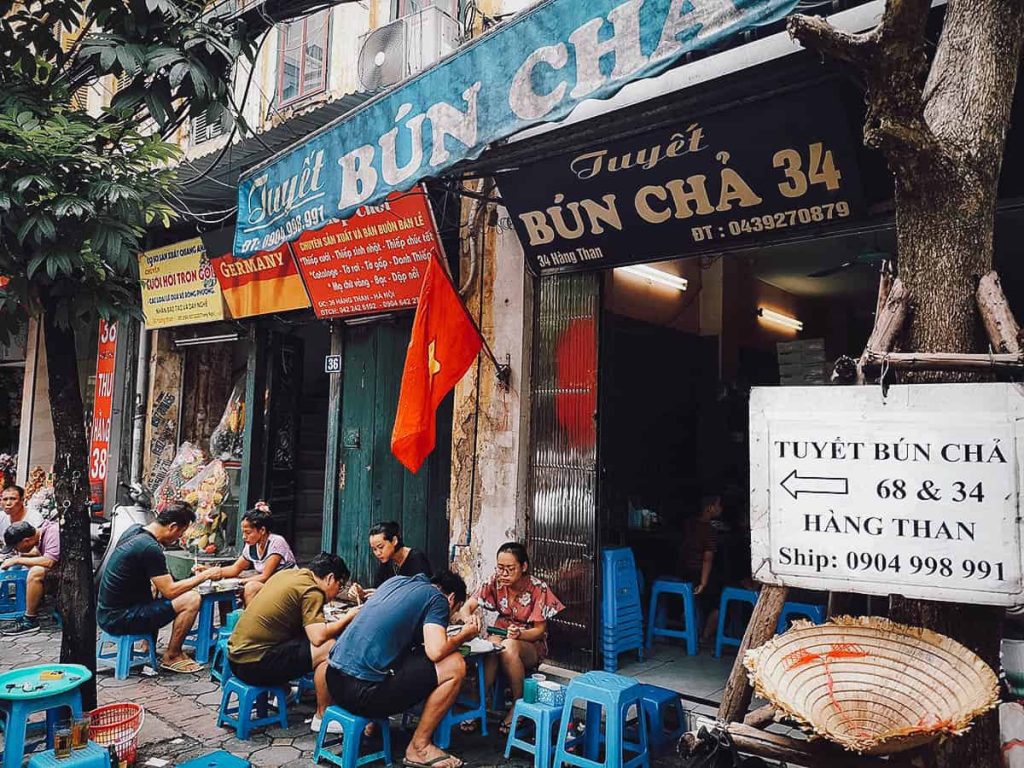
Here’s a magic trick: Walk into any bún chả spot on a Tuesday afternoon. Order the standard plate. The pork will be charred at the edges exactly like it was last Tuesday. And the Tuesday before that. The vendor isn’t “iterating on the marinade” or “pivoting the protein strategy.” They’re grilling pork the way their mother taught them, over charcoal they light at 4 AM every morning, the way that keeps the office workers coming back every single lunch hour.
In a world obsessed with “innovation,” Vietnamese street food operates on radical consistency. The smoke smells like smoke. The nước chấm is sweet, tangy, and has just enough kick from the chile, exactly as it was yesterday.
Lesson 2: Novelty attracts; consistency retains
That hotel client I was late for? They kept renovating their lobby every six months, chasing Instagram trends. Meanwhile, their returning guests kept asking: “What happened to the breakfast nook we loved?”
For your business: Before you add that new service or rebrand your packaging, ask: Are we fixing something that’s broken, or breaking something that works? Your loyal customers didn’t fall in love with your potential. They fell in love with your reliability.
For hotels, this kind of recognition is a foundational customer retention strategy, not a “nice to have.” In hospitality marketing, consistency builds trust faster than novelty ever will.

The Spectacle of Transformation
Watch a bún chả master at work. The fanning of the charcoal, the sizzle of the pork hitting the grill, the white smoke curling up through the leaves of the fresh herbs they’re arranging on your plate—it’s a five-minute performance art piece that ends with lunch. Vietnamese street food doesn’t hide the process behind a kitchen door. It puts the transformation right in front of you, smoke and all.
Why does this matter for retention? Because trust is built on transparency. You see exactly what goes into your food because it’s happening three feet from your face. You see the fresh herbs being washed. You see the pork coming off the same grill they’ve used for ten years. No mystery. No “proprietary black box.”
Lesson 3: Show your work
When we onboard clients at Atelier ATTENTION, we don’t just deliver a polished strategy deck and disappear. We show the smoke. We share the messy middle. We let clients see how the sausage (or the chả) gets made—sometimes over a Google Meet where we screen-share the actual work, not just the polished final slide.
For your business: Are you hiding your process from clients because you think it looks “unprofessional”? Or are you inviting them to see the craft? In hospitality, this means showing guests why you chose that local supplier or how your housekeeping team trains. Transparency breeds loyalty faster than perfection does.
Community as a Retention Strategy in Hospitality
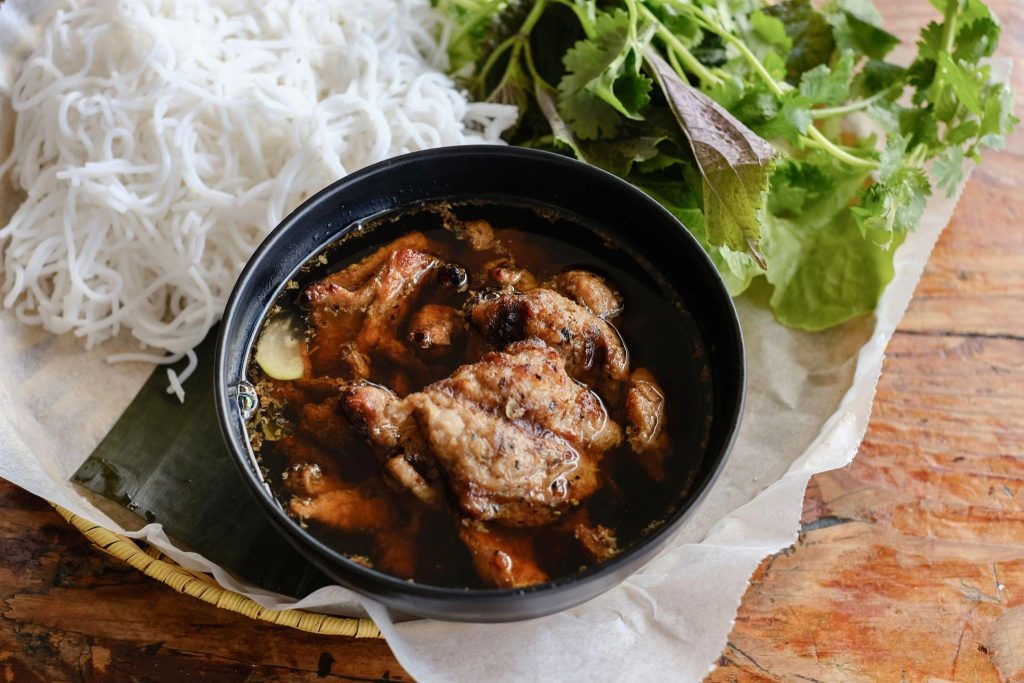
The plastic stools are close together. Uncomfortably close, if you’re used to Western personal space. You share the nước chấm pot—and the extra chile paste—with strangers. You negotiate the last piece of nem rán with the table next to you. That proximity is strategic. You don’t just eat at a street food stall; you commune. You become a regular among regulars, bound by the shared smoke and the knowledge that you all chose this specific grill on this specific street.
The vendor isn’t selling pork. They’re selling membership to a club that happens to serve excellent bún chả.
Lesson 4: Retention is social
That luxury hotel chain I mentioned earlier? They were treating returning guests like database entries. But retention is emotional—and emotions happen in community, not in isolation.
For your business: How are you connecting your customers to each other? Not just to your brand, but to the tribe of people who choose your brand? The strongest retention strategy isn’t a discount code; it’s the fear of missing out on the community gathered around the grill.
The “Why Not Someone Else?” Test
Every bún chả vendor in Hanoi is selling essentially the same thing. Pork. Noodles. Dipping sauce. The ingredients come from the same markets. The recipes are generations-old. The prices are within 10,000 VND of each other. So why does the grandmother with the Hàng Mành Street grill have a line while the stall three doors down sits empty?
Because she bothered to remember that I like extra chile in my nước chấm. Because she asks about the client pitch. Because she saves me the last piece of nem cua bể when she knows I’m coming. Because, in a city of ten million people rushing past each other, she creates a micro-moment of stillness and recognition over the charcoal smoke.
Lesson 5: Your moat is micro
In global marketing, we obsess about “scalable systems.” But retention happens at the smallest possible unit: The individual interaction. The specific memory. The micro-adjustment—extra garlic, extra chile, more herbs—that says “I was paying attention.”
For your business: You don’t need a bigger loyalty program. You need smaller moments of attention. The handwritten note. The “we saved your usual table.” The acknowledgment that this isn’t their first rodeo with you.

Bringing the Street to the Suite
So how does this apply if you’re not running a grill on Hàng Mành? If you’re a DMC in Vietnam trying to impress European travelers? If you’re a boutique hotel in the Middle East competing with international chains?
The principles don’t change—only the scale does.
At Atelier ATTENTION, we’ve built our hospitality marketing on these street-level lessons. When we manage social media for a resort, we don’t just post glossy pool photos. We post the breakfast chef remembering a guest’s allergy. We highlight the concierge who knows the secret bún chả spot that isn’t on Google Maps—the one where the vendor will remember whether you like it spicy or mild. We sell the recognition, not just the room.
Because in the end, whether you’re charging 45,000 VND for grilled pork or 300€ for a hotel room, retention comes down to the same question: Did you make them feel like a regular in a world of tourists?
The grandmother doesn’t have a CRM. She has curiosity—and a very hot grill.
And honestly? That’s the most sophisticated retention technology I’ve ever seen.
These lessons from Vietnamese street food remind us that the most effective customer retention strategies in hospitality aren’t powered by software, but by attention, memory, and care.

Schedule your free consult
Schedule a free 45-minute video call with us to discover how Atelier ATTN. (ATTENTION) can enhance your marketing efforts. Learn how our team of talented and motivated professionals in Vietnam can provide exceptional value with competitive pricing.