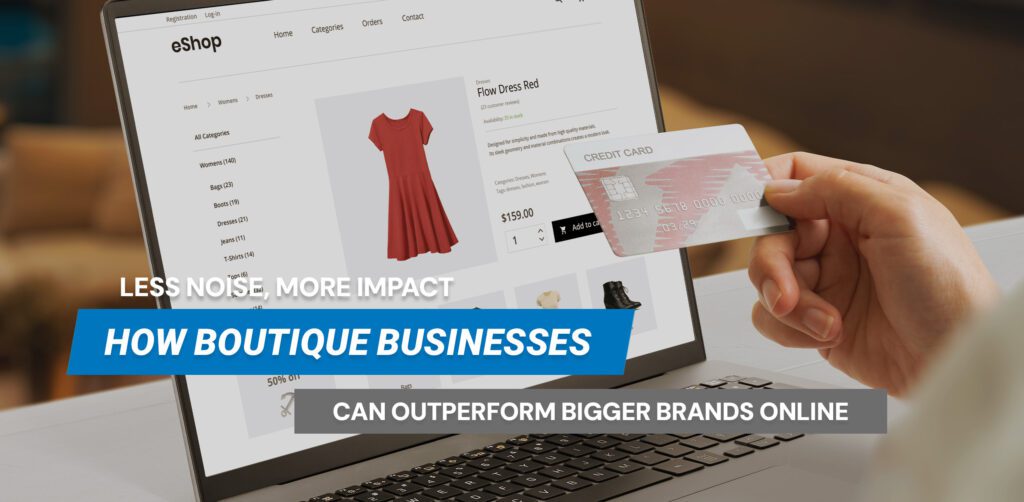
As an entrepreneur running a boutique business, competing with larger, well-funded brands online can feel overwhelming. But here’s the good news: being smaller and specialized gives you unique advantages. In the crowded digital world, it’s not about making more noise—it’s about making the right kind of impact.
1. Clearly Define Your Niche
Bigger brands aim for broad appeal, which often results in generic messaging. As a boutique business, your strength lies in specialization. Identify your niche clearly and embrace it.
Example: If you run a boutique bakery specializing in gluten-free pastries, clearly showcase this specialty. Create focused content and social media posts that speak directly to customers who need gluten-free options, rather than generic bakery customers.
2. Leverage Authenticity
Consumers today value authenticity. They connect more easily with brands that feel genuine and relatable. Boutique businesses naturally have compelling stories—your passion, your journey, your craftsmanship—that larger brands struggle to replicate authentically.
Example: Share behind-the-scenes stories about your product development, your challenges, and successes on your website or social media. This transparency builds trust and loyalty among your audience.

3. Create Personalized Experiences
Large brands typically rely on mass marketing strategies, leaving personalized engagement challenging. Your boutique business has the flexibility to offer personalized customer experiences, both online and offline.
Example: Use personalized emails, handwritten thank-you notes, or customized product suggestions. Customers who feel personally valued are more likely to return and recommend your business.
4. Optimize for Targeted SEO and Local Search
Boutique businesses often underestimate the power of targeted SEO and local search. Optimizing for specific, relevant keywords helps potential customers find you exactly when they’re looking for your unique products or services.
Example: Rather than targeting broad terms like “bakery,” optimize your content for specific queries like “gluten-free bakery in [Your City].” This targeted approach increases your visibility among the most relevant potential customers.

5. Smart Social Media Use
Instead of trying to dominate every social media platform, choose one or two channels where your target audience actively engages. Create meaningful, consistent content tailored specifically to these platforms.
Example: If you’re selling visually appealing products, Instagram or Pinterest might serve you best. Regularly share beautiful photos, engage actively with comments, and collaborate with micro-influencers who align closely with your niche.
6. Embrace Collaborative Partnerships
Boutique businesses benefit significantly from partnerships. Collaborate with complementary businesses or local influencers to amplify your reach.
Example: If you’re a local boutique clothing store, partner with a nearby café for a joint event or social media campaign. Each business reaches new customers, benefiting everyone involved.

7. Measure, Adapt, and Repeat
Stay agile and responsive. Regularly measure your online performance, adapting your strategies based on insights from analytics.
Example: Track website traffic, social media engagement, and sales conversions. Use this data to refine your content strategy, advertising campaigns, and customer interactions.
Final Thoughts
Boutique businesses may not match big brands in size or budget, but your agility, niche focus, and authentic connection can lead to stronger, more meaningful customer relationships. In today’s noisy online world, less can indeed mean more—more clarity, more authenticity, and ultimately, more impact.
At Atelier ATTENTION, we specialize in amplifying the unique strengths of boutique businesses. Ready to make your online impact count? Let’s talk.