By recognizing cultural nuances, a designer can create experiences that resonate with diverse audiences. This approach allows for the design to be more inclusive and appealing across different cultural backgrounds, enhancing user engagement and satisfaction.
Culture plays a critical role in shaping user experience. It encompasses a range of elements like beliefs, values, norms, and behaviors shared by a specific group of people. Understanding culture is essential in designing user experiences for products or services.
By recognizing cultural nuances, designers can create experiences that resonate with various audiences and avoid potential misunderstandings or conflicts.
The Influence of Culture on Design:
Globally, people behave and interact differently based on their cultural backgrounds. Dutch social psychologist Geert Hofstede identified six dimensions of cultural differences in his Cultural Dimensions Theory:
Individualism vs. Collectivism:
In individualistic cultures, such as the USA, personal preferences and self-expression are valued. In collectivist cultures, like Japan, harmony and social relationships are prioritized.
Power Distance:
This refers to the extent to which societies accept and expect hierarchical structures. In high power distance cultures, like many Asian countries, individuals respect authority and expect clear guidance.
Masculinity vs. Femininity:
These cultural aspects relate to values placed on assertiveness, competitiveness, and achievement versus cooperation, nurturing, and quality of life. Masculine cultures, like the USA, emphasize ambition and success, while feminine cultures, such as the Netherlands, prioritize quality of life and work-life balance.
Uncertainty Avoidance:
This dimension refers to the extent to which cultures feel threatened by ambiguity and uncertainty. Some cultures, like Germany, have a high uncertainty avoidance, emphasizing clear structures.
Long-term Orientation:
Cultures with a high long-term orientation encourage preparation for the future, while those with a low long-term orientation value quick results and measure performance on a short-term basis.
Indulgence:
This dimension measures the extent to which societies allow their members to enjoy life and have fun as opposed to restraining satisfaction of needs.
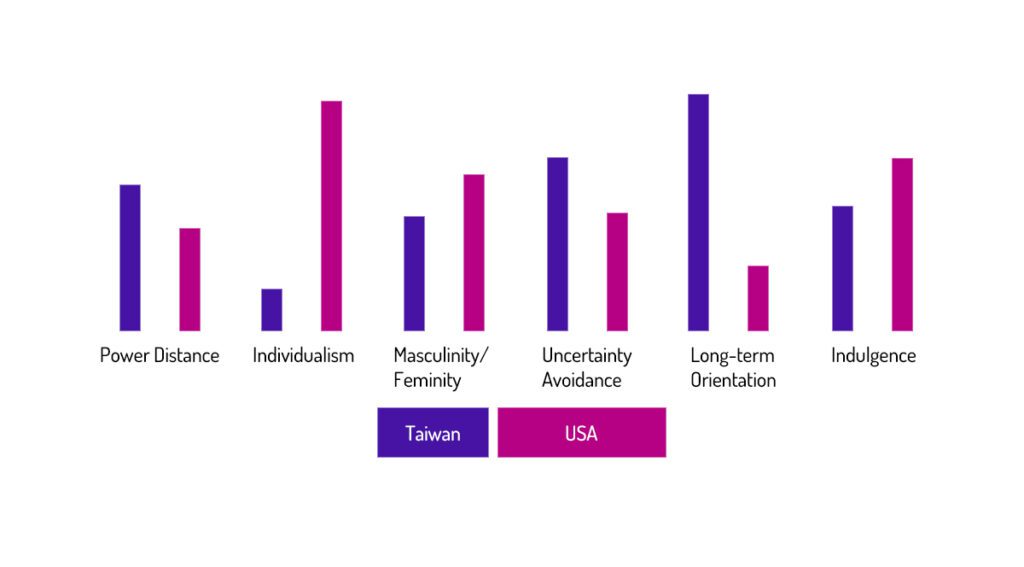
For example, let’s examine the cultural differences between Taiwan and the USA across the six dimensions mentioned:
Guidelines for Designing Culturally Inclusive User Experiences:
1. Identify Cultural Differences Even in Close Proximity
When it comes to designing multicultural user experiences, recognizing the cultural differences between regions—even if they are geographically close—is essential to creating an acceptable product.
For example, TravelBird, an online travel company based in the Netherlands, operates in 17 European countries. At the first step of the checkout process, users select the date for their travel package. Depending on the domain through which users access the website, the user experience (UX) varies. This adaptation recognizes subtle cultural preferences that can differ significantly even among neighboring countries.
This approach ensures that the design feels personalized and relevant to each user’s cultural context, thereby enhancing the overall user engagement and satisfaction. By paying close attention to these details, designers can create a more welcoming and intuitive interface that resonates with a diverse audience.
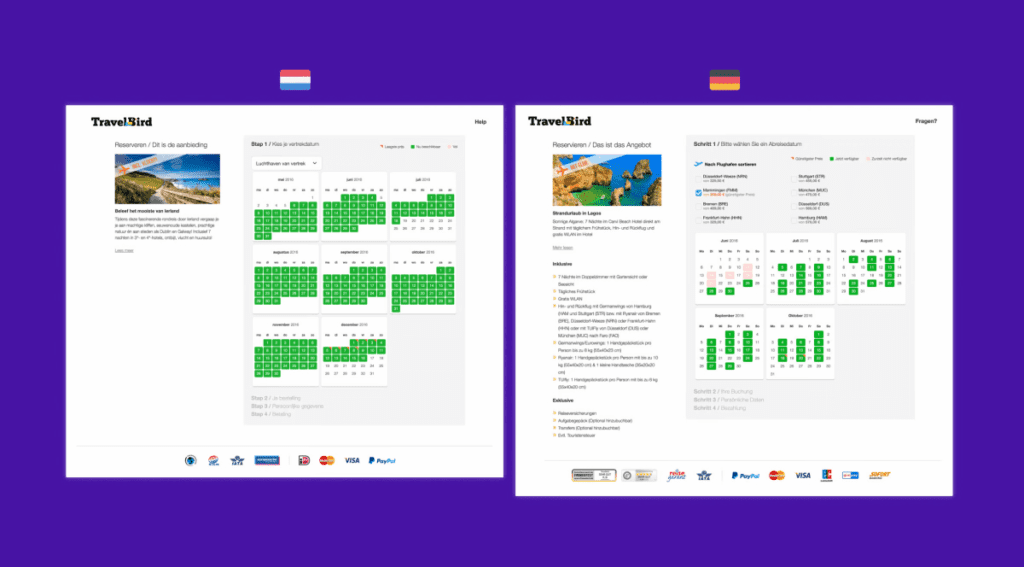
When studying the Dutch and German versions of the TravelBird website, researchers discovered that German users scored highly on the Uncertainty Avoidance dimension of cultural differences. This means that German users generally prefer more certainty and assurance about what they are booking. To cater to this preference, the website included a list of specific items in the booking process, which helped to provide the necessary reassurance and subsequently led to a higher conversion rate among cautious German customers.
2. Research Local UI Trends
In certain cultures, specific design patterns are accepted as universal. For instance, with the help of user interface designs from platforms like Facebook and Gmail, the hamburger and kebab menus have become popular choices for displaying navigation links and other options.
However, when these icons are introduced outside the Western context, into Eastern cultures, users might find them confusing.
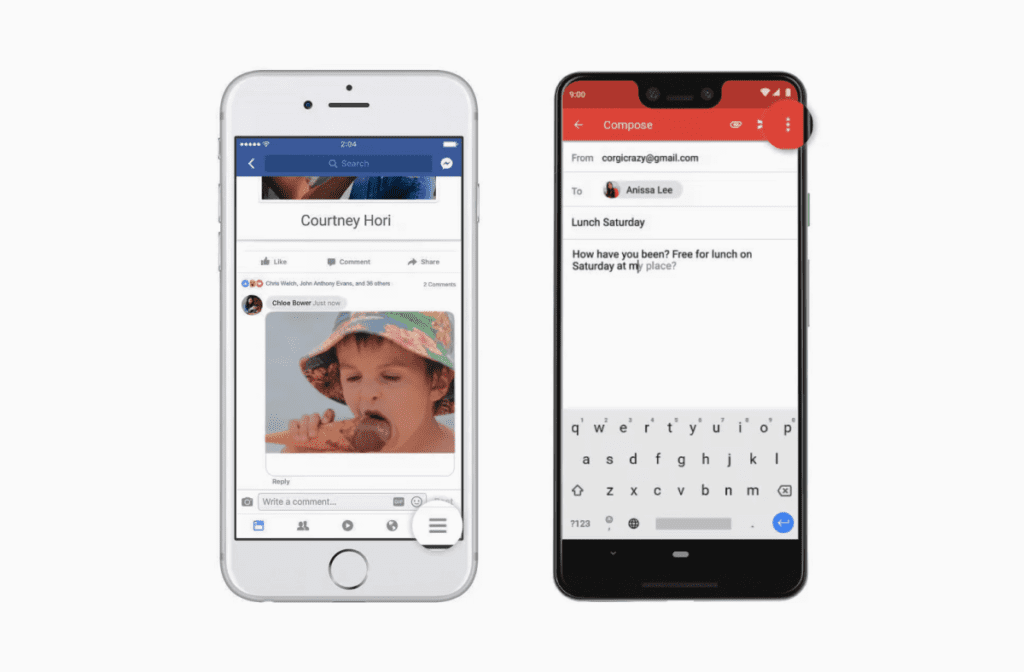
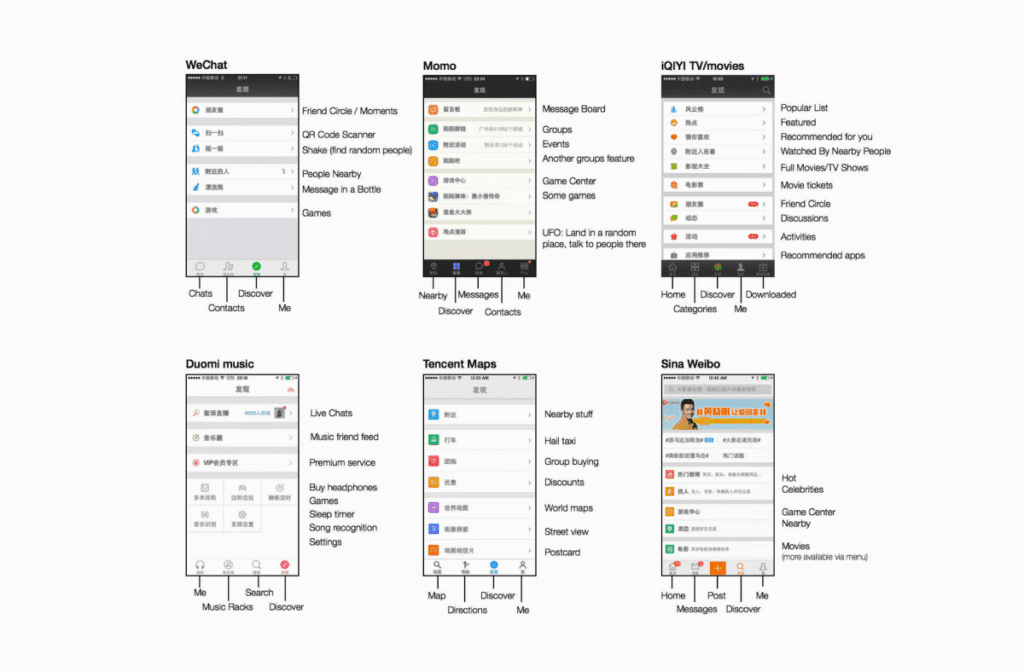
In research conducted by Dan Grover, a former product manager at Tencent, it was observed that in popular Chinese apps, including WeChat and Weibo, the hamburger or kebab icons are not used. Instead, a “discover” button, often represented by a compass icon, is used for additional features that are not essential. For Chinese users, the action of “discovering” invokes curiosity and is valued more than just a button for multiple options. This adaptation shows an understanding of local user interaction preferences and cultural significance, making the apps more intuitive and engaging for the regional audience.
For Atelier ATTN, our experience working with clients from the MENA region (Middle East and North Africa) taught us that the languages spoken vary from place to place. Arabic script varies from other languages as it is written from left to right. It is one of the topmost things which needs to be kept in mind while designing Arabic interfaces for the Middle East market.
Arabic tends to be more wonderful than English. Something which could be explained in only a few words in English might take 2–3 lines in Arabic. Digits are written left to write in Arabic, unlike letters. Arabic needs a bigger font than English. (Get a sense of how much thought goes into typefaces here, for example, at the New York Times.)
Here at Atelier ATTN, the UI/UX designers always keep in mind the usability of every button and action. For example, when designing for the West, usually people do not have very long names, which will fit into normal size name fields; but when designing for Arabs, usually their names are long. The name field needs to be big enough for real users to be able to fit their names in. These small things might feel irrelevant at the start, but it does differentiate between okay and awesome products.

3. Understanding How Users Interact with Information
When Mozilla Firefox developed localized landing pages for different countries, they took into consideration cultural psychologies. The U.S. website is minimalistic and clean with a clear Call to Action (CTA), while the Chinese version is more content-heavy—banners, news, and advertisements fill all available spaces.
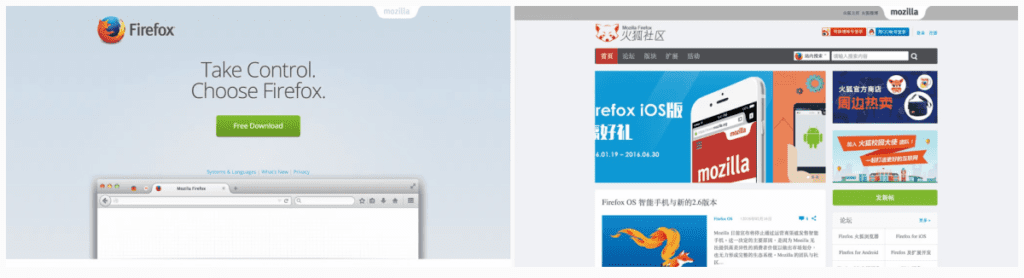
How culture affects design: The difference between Mozilla Firefox USA and China
This is not due to a style trend but due to the very different levels of individualism in each country. The U.S. is a society with high individualism, and users in the U.S. often know what they are looking for. In contrast, China is a more collectivist society, where citizens prefer to read what others are reading.
Language also plays a role in how users interact with information. Mozilla strategist Bram Pitoyo hypothesizes why the Chinese Firefox website is different: “Typing in Chinese takes a long time and finding the exact word is not easy. Searching is very hard, so optimize for browsing.”
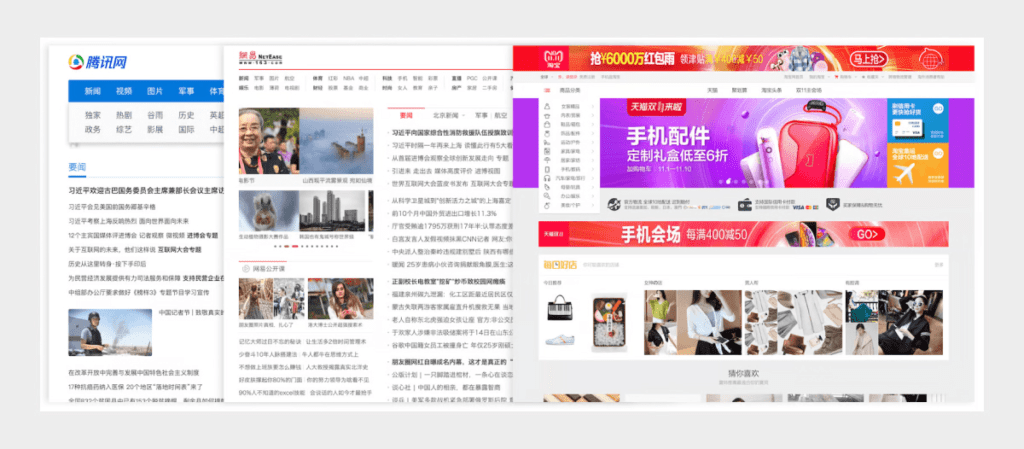
Referencing user interface designs that originate from local culture and language is much more effective than introducing a pattern known in the West and expecting users in the East to adapt. Without this phase in product development, businesses risk creating products that are ineffective in local markets.
4. Understanding Users Through Both Quantitative and Qualitative Data
To deeply understand users and local markets, quantitative and qualitative research are essential tools for providing in-depth insights.
Deskbookers, an online marketplace for renting workspace based in the Netherlands, planned to expand across Europe—specifically to Germany. They had been successful with sales over the phone and in person, but their German website was underperforming.
To identify the reasons, they utilized various research methods: usability testing, interviews, analyzing Google Analytics data, heat maps, user session recordings, and academic research (such as trustworthy white papers, cultural studies, and user behavior reports).
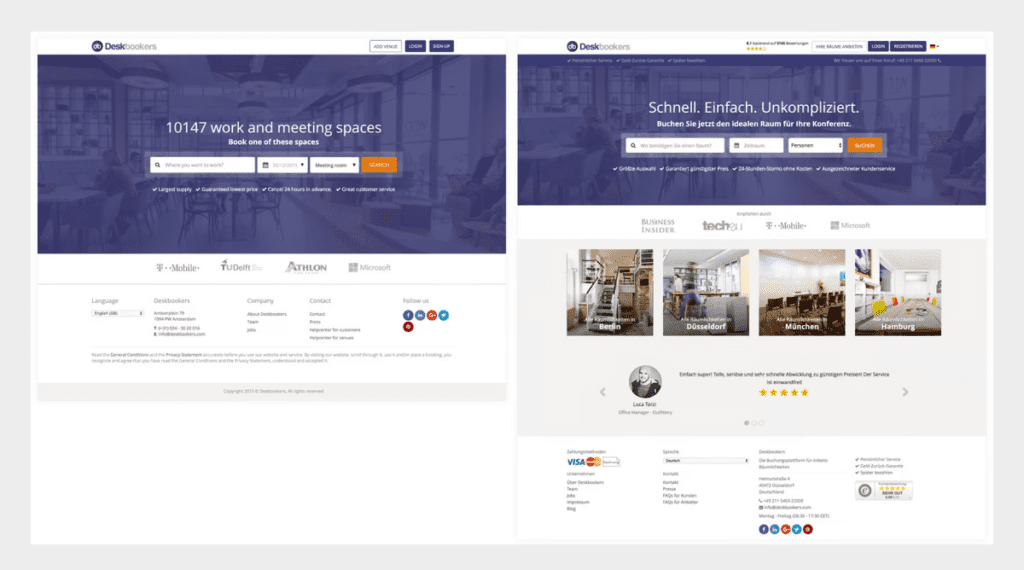
To appeal to German users, they added elements such as customer reviews, trust badges, and more detailed copy. The result? Increased conversion rates and customer satisfaction. After a period of continuous optimization, Germany is now one of the strongest European presences for Deskbooker.
Conducting quantitative and qualitative research might seem unnecessary if there is already a general understanding of the local culture, but research methods will undoubtedly reveal nuances that aren’t always apparent—and that can enhance the user experience.
5. Identify the Main Devices and Connectivity Capabilities of the Market
If the target audience for a product is affluent tech employees in San Francisco, it might be reasonable to assume that most users have the latest iPhone—making it easier to design specifically for that device. However, when designing for a new market, it’s important to avoid hasty assumptions and start with research.
SMART, a leading telecommunications company in the Philippines, designed a mobile app for its loyalty program. We began by conducting research and discovered that 41% of users were using various Samsung Galaxy versions with very similar screen sizes. Notably, most were on WAP phones with low connectivity speeds.
With market research, the company developed a product formatted for the appropriate screen sizes and designed to load quickly even with minimal connectivity speeds.
By identifying the main devices in the market and connectivity statistics, the design team can create a design that effectively exploits the environment in which it is used. Without market research, a product could end up being ineffectively designed.
Conclusion
Designers have a unique opportunity to shape experiences that are relevant to people from diverse cultural backgrounds. By incorporating cultural sensitivity into their work, designers can create inclusive, respectful, and meaningful designs. It’s crucial for designers to recognize the impact of culture on user experience and approach their work with empathy and openness. At Atelier ATTN, we value cultural factor and tailor our service to match customer’s needs. Schedule your free consultation with us today and start elevate your business.
In summary, designing for culturally diverse experiences is a journey of empathy, curiosity, and continuous improvement. By embracing cultural sensitivity, designers can create designs that transcend cultural boundaries, foster meaningful connections, and enhance the user experience for a global audience. Let’s strive to design with cultural inclusivity at the forefront, shaping experiences that honor the rich tapestry of our diverse world.